A smiling woman holding a clear aligner in warm natural light

Invisalign clear aligners

Invisalign in North York

Clear, removable aligners for teens and adults.

Cost and financing

What Invisalign costs

The price depends on how much movement is needed and how long treatment runs, so there is no single figure. After your consultation and scan, we give you a firm quote and explain what it includes: your scan and plan, your aligners, your check-ins, and your retainers.

Current offer

$2,500 off

eligible comprehensive treatment

Book a consultation →
  • 0% financing

    On larger treatments. The term depends on your case, subject to credit approval.

  • Insurance, direct billed

    We direct bill most major Canadian insurers.

  • Priced at your consultation

    Your full quote is confirmed after an assessment.

Fees depend on your treatment, and we never charge more than the Ontario Dental Association (ODA) fee guide. We bill your insurance directly and accept the Canadian Dental Care Plan (CDCP). With CDCP, you pay only your CDCP co-payment, or nothing if CDCP covers 100% of your care, and we never charge the difference between the CDCP and ODA fee guides. You’ll know the cost before you decide. See insurance, direct billing and CDCP.

A consultation is required to determine whether this treatment is right for you. Individual results vary.

Clear aligners

Clear, removable aligners, planned around you.

Invisalign straightens teeth with clear, removable aligners instead of brackets and wires. At our studio at Sheppard and Willowdale, each plan is designed around the person wearing them: their teeth, their bite, their age, their goals, and the routine they need treatment to fit into.

We start with a conversation about what you would like to change. We then explain each option with its reasoning and its fee, so the timeline, cost, and expectations are clear before treatment begins.

Friends laughing over lunch with an Invisalign case on the table

How Invisalign works

How clear aligners work

Each set of Invisalign aligners is custom-made and shaped to move your teeth a little further than the last. Most patients move to the next set every one to two weeks, depending on the plan. The trays lift out for meals and cleaning, then go back in so treatment can continue through the day.

Aligners are simple to wear; the planning is what moves the teeth. Each movement is sequenced so the teeth and bite are guided in the right order, and the aligners need to be worn consistently for that plan to work.

A clear aligner lifted from a seesmile case in a sunlit kitchen

Clear, removable aligners

Invisalign for teens and adults

Clear aligners can work across a wide range of ages, but the plan should look different for every person.

Teens

For younger patients, we first confirm that enough adult teeth have come through and that the timing is right. Aligners can suit teens who will wear them consistently, and some versions include wear indicators that make it easier to stay on track.

Adults

Many adults choose Invisalign to address long-standing crowding, spacing, or teeth that have drifted over the years. Clear aligners can do this without brackets or wires, and the trays come out for meals and cleaning.

The whole household

Because seesmile cares for children and adults in one studio, parents and children can often be assessed in the same place. Some families begin treatment at different times, while others simply use the consultation to understand what each person needs and when to begin.

A consultation confirms whether aligners suit each person and whether now is the right time to start.

Is Invisalign right for you?

Is Invisalign right for you?

Clear aligners can address crowding, spacing and gaps, and some bite concerns such as an overbite, underbite, or crossbite. A more even bite can be easier to clean and may help reduce uneven wear over time.

Some cases are better served by braces, particularly when the bite correction is more complex or when teeth need more controlled movement. The comparison below sets out how the two differ.

Invisalign or braces

Which option is right for you?

Consider Invisalign if

Clear aligners

  • You want a discreet treatment option
  • You have mild to moderate crowding, spacing or bite concerns
  • You prefer trays you can remove for meals and cleaning
  • You are willing to wear aligners consistently
Consider braces if

Traditional braces

  • You have a more complex bite correction
  • Your teeth need more controlled movement
  • You prefer a fixed treatment option
  • You would rather not manage aligner wear yourself

At your consultation, we examine your teeth and bite and tell you which approach suits your case, and why. You can also read more about braces.

Treatment steps

What treatment is like at seesmile

From the first visit to your retainers, treatment follows a clear path.

01

Consultation and digital scan

We assess your teeth, gums, and bite, then take a digital scan, so there are no putty impressions.

02

Treatment preview

From the scan, we map your tooth movement and can show a 3D projection of how your teeth may move. It guides expectations, while actual results vary.

03

Getting started

When your aligners arrive, we fit them and show you how to wear, remove, and clean them. Some cases use small tooth-coloured attachments to guide certain movements.

04

Check-ins

You come in periodically so we can confirm your teeth are tracking and provide your next sets.

05

Refinements

If a few teeth need extra guidance near the end, we may add a short set of refinement aligners.

06

Retainers

Once movement is complete, retainers help hold the result because teeth tend to drift over time.

Planning your aligners

Planned around your whole bite

Invisalign is not only about lining up the front teeth. Your plan also needs to respect the roots, the bite, and how your teeth will settle when treatment is complete.

The planning, fittings, and check-ins for your aligners happen in one studio, alongside the rest of your dental care, so your records and history stay in one place. If your case would be better managed by a registered specialist in orthodontics, we will tell you plainly and arrange a referral.

A person by the Care for your smile wall at seesmile

Visit our North York studio

Visiting seesmile for Invisalign

seesmile Dental Studio is at 175 Sheppard Avenue East, about a 10-minute walk from Sheppard–Yonge station, with free underground parking and step-free access. We are open weekday evenings until 8 pm and Saturdays from 9 am to 4 pm, closed Sunday, and we direct bill most major Canadian insurers. Book online or call us to arrange an Invisalign consultation. New to seesmile? See what your first visit includes.

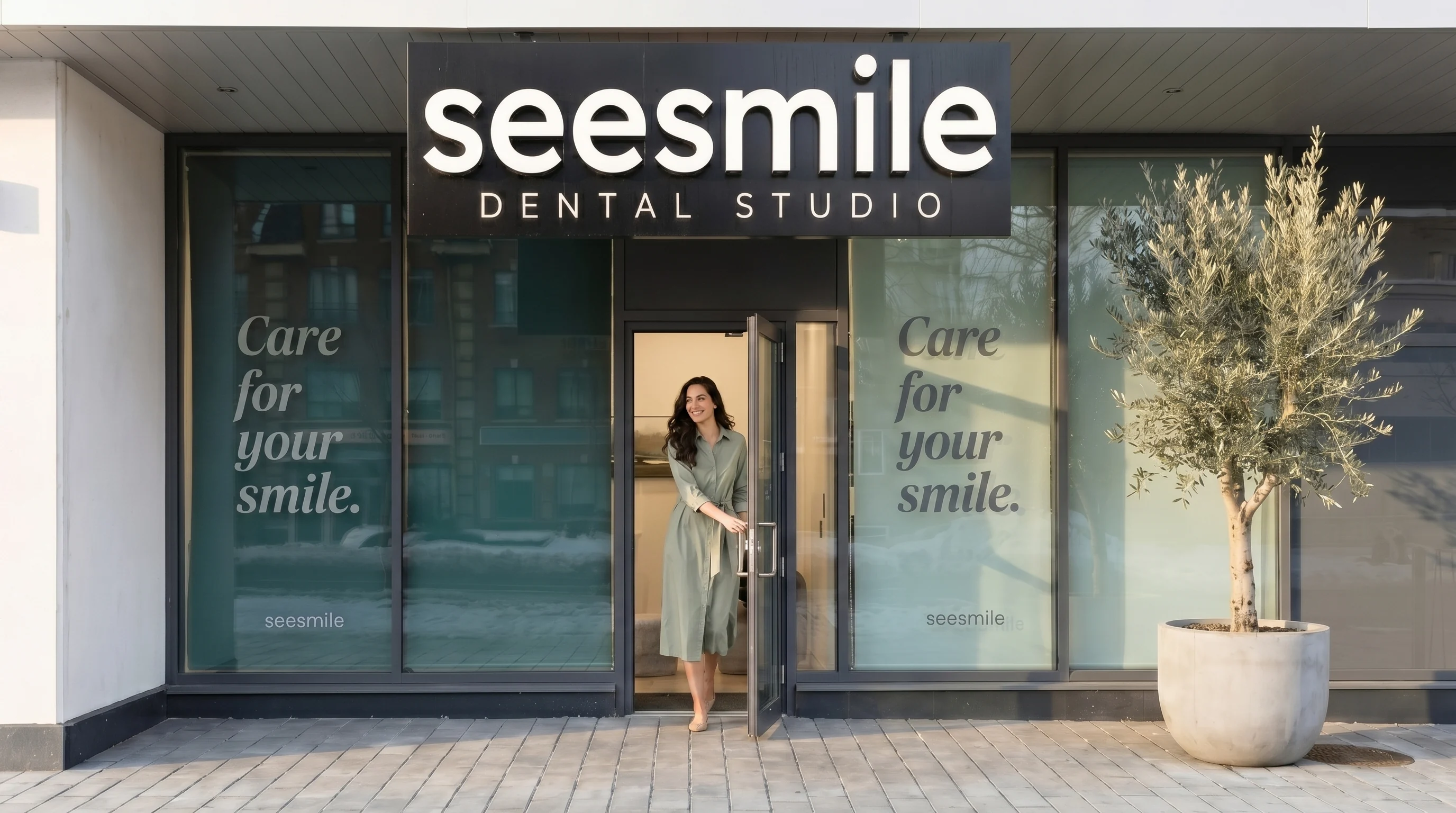
The seesmile Dental Studio storefront, with a person at the entrance

Patients come to our North York studio from across Toronto. We're a short trip on Line 1 (Yonge) and Line 4 (Sheppard), with free underground parking on-site.

Invisalign questions

Questions, answered.

Often, yes. For teens, we check that enough adult teeth have come through, that the timing is right, and that consistent wear is realistic. A consultation confirms whether Invisalign suits your teen and when to begin.

Yes. Many adults use Invisalign to address crowding, spacing, or teeth that have shifted over the years, without brackets and wires.

We talk through what you would like to change, assess your teeth, gums, and bite, and take a digital scan if Invisalign looks suitable. From there, we explain your options, timeline, and quote before you decide.

It depends on the case. Simpler corrections can take several months, while more involved ones run longer. We give you an estimated timeline after your scan and keep you updated as treatment progresses.

Most plans require 20 to 22 hours of wear each day, including overnight. The trays come out mainly for meals and cleaning. Consistent wear is what keeps treatment on track.

Sometimes teeth move a little differently than planned. If that happens, we reassess the fit and may recommend refinement aligners to guide the teeth more precisely.

It depends on the case. Braces give precise control for more complex corrections, while aligners suit many milder cases and rely on consistent wear. We will advise on the right fit at your consultation.

Yes. Teeth tend to shift over time, so a retainer is the final step that holds your result. We will explain how often to wear it.