

A smiling woman by a sunlit window at home

Dental implants

Restore your smile with dental implants.

Cost and financing

Clear options, clear costs.

Implant cost varies with the number of implants, any grafting or extractions, and the type of final restoration. Your full quote is confirmed after an assessment.

Limited time offer

From $4,500

single-tooth dental implant, crown included

Book a consultation
  • 0% financing

    Up to 24 months on major treatment plans, subject to credit approval and terms.

  • Insurance, direct billed

    We direct bill most major Canadian insurers.

  • Priced at your consultation

    Your full quote is confirmed after an assessment.

A consultation is required to determine whether this treatment is right for you. Individual results vary.

What are dental implants?

A long-term way to replace missing teeth.

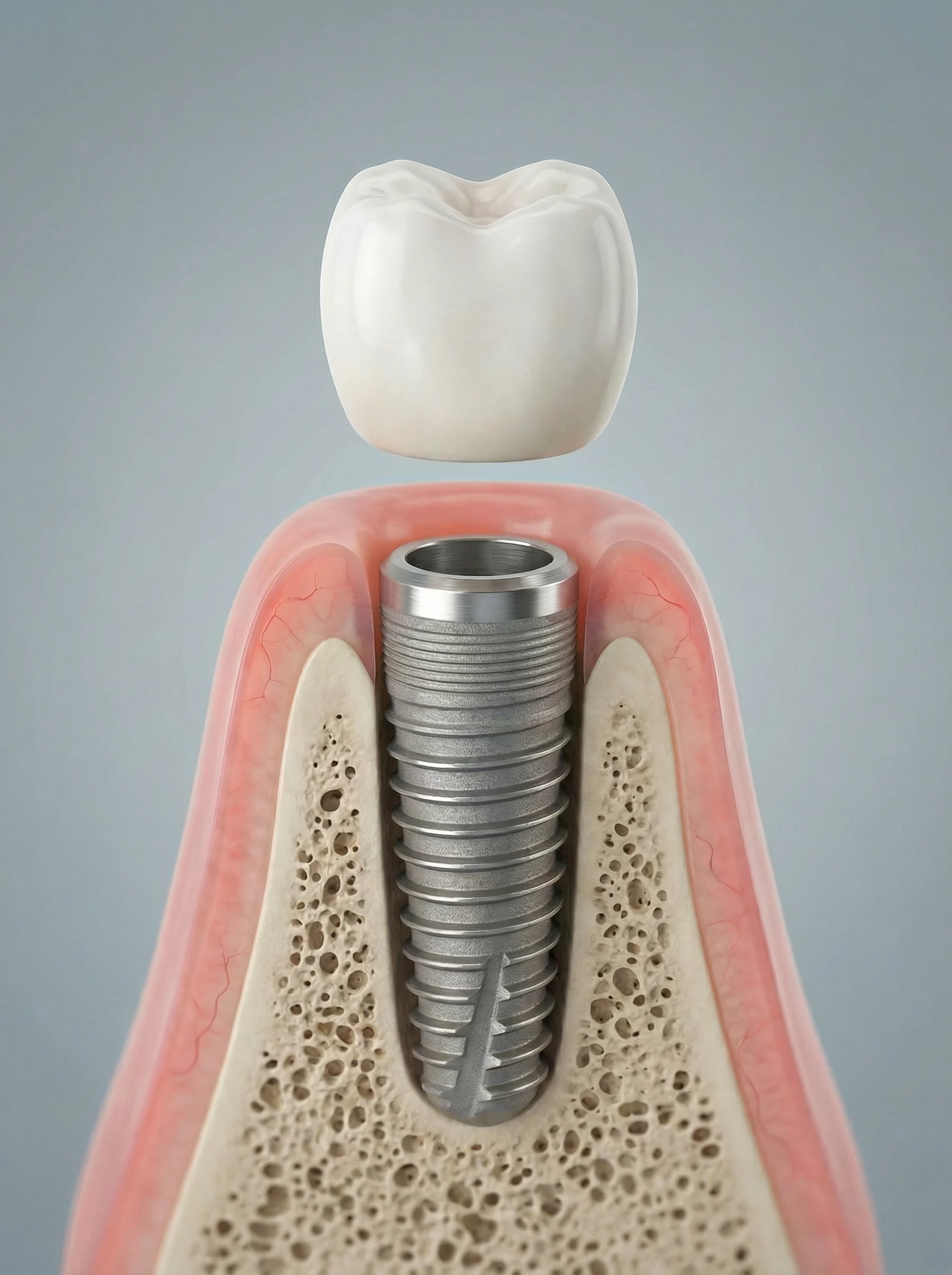
Dental implants are a long-term option for replacing missing teeth. An implant consists of a titanium post that is surgically placed into the jawbone, topped with a custom-made crown that looks and functions like a natural tooth.

3D illustration of a dental implant: a titanium post in the jawbone with a crown above

Benefits of dental implants

Why patients choose implants.

Durability and longevity

With proper care, dental implants can last for many years and are designed for longevity, making them a long-term investment in your oral health. Unlike bridges, which may need replacement every 10 to 15 years, implants are a long-term option.
Natural appearance

Implant crowns are custom-designed to match your natural teeth in colour, shape, and size, designed to blend with your existing teeth. The crown is created specifically for your mouth.

Improved function

Implants function like natural teeth, allowing you to eat, speak, and smile with confidence, without the restrictions that can come with dentures or bridges. Many patients report that implants feel natural after the adjustment period.

Bone health preservation

When a tooth is missing, the jawbone begins to deteriorate. Implants help preserve the jawbone by providing stimulation that keeps the bone healthy and strong, unlike other tooth replacement options.

No impact on adjacent teeth

Unlike bridges, implants do not require modification of adjacent healthy teeth. Your other teeth remain intact and unaffected, preserving your natural tooth structure.

Improved confidence

Many patients report greater confidence and self-esteem after treatment. Being able to smile, eat, and speak without worry about your teeth can improve your quality of life.

Bone grafting

A stronger foundation when needed.

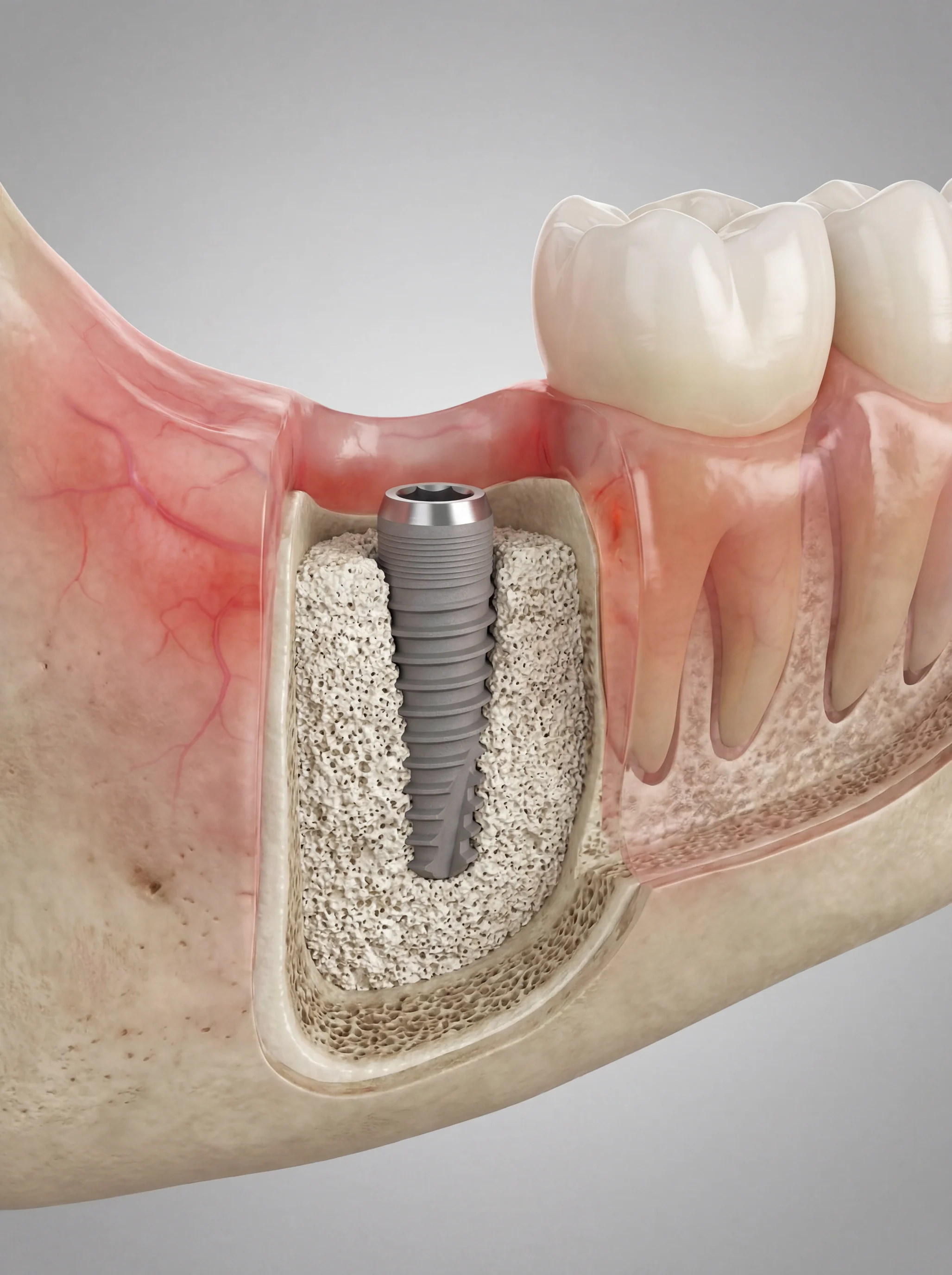
Some patients do not have sufficient jawbone structure for implant placement. In those cases, bone grafting may be recommended to create a stronger foundation. It is usually a separate procedure before placement, with some added healing time, and we only recommend it if it is necessary.

3D illustration of a dental implant set into grafted jawbone

The dental implant procedure, step by step

What to expect, start to finish.

01

Consultation and assessment

We examine your mouth and take 3D imaging to assess your jawbone and determine whether implants are a suitable option. We discuss the procedure, timeline, costs, and answer your questions, so you feel comfortable moving forward.

02

Treatment planning

Using advanced 3D imaging, we create a detailed plan tailored to your needs. This maps out the exact placement and design of your implant, supporting precision and a predictable result.

03

Implant placement

The titanium post is placed into the jawbone with precision and care to minimize discomfort. The area is numbed with local anesthesia, and you receive detailed post-operative instructions for proper healing.

04

Osseointegration

Over the following months (typically 3 to 6), the implant integrates with the jawbone, creating a strong and stable foundation for your crown. Proper care during this phase is essential, and we guide you through it.

05

Crown placement

Once integration is complete, a custom-made crown is attached to the implant, designed to match your natural teeth and restore full function. This is typically a quick, single appointment.

06

Ongoing care and maintenance

We schedule regular follow-ups to monitor your implant and keep it healthy. Good oral hygiene and routine dental visits support long-term implant success.

Book your free consultation today

We will take the time to understand your goals, answer every question, and help you decide what’s right for you.

Common questions about dental implants

Questions, answered.

The entire process typically takes 3 to 6 months from initial consultation to crown placement. The osseointegration phase, when the implant integrates with the jawbone, is the longest part of the process.
The placement is performed under local anesthesia, so you should not feel pain during the procedure. You may feel pressure or vibration, but not pain. Some patients experience mild discomfort afterward, which can be managed with over-the-counter pain medication.
Implant failure is uncommon, and implants have a strong track record, though success is not guaranteed for everyone. Factors that can increase risk include smoking, poor oral hygiene, certain medical conditions, and inadequate bone structure. We discuss any risk factors with you during your consultation.
If you have gum disease, we typically recommend treating it before proceeding with implants. Healthy gums are important for implant success.
Yes, you can have multiple implants if you have multiple missing teeth. The number of implants depends on your specific situation and jawbone structure.